Saturday, September 17, 2011

Potter's House (Part 2)

Sweet!  A chance to use my Money Christ graphic again!
I had been handed a couple of materials as I walked in the door, and as we still had a little time before the service, I decided to divert my attention there.  The first item was one of the most detailed offering envelopes I’ve ever seen, asking for full address, phone number, and the type of gift (the options being tithe, offering, first fruits, or “MEGAcare,” which is the church’s Haiti relief fund).  There was also a section on the envelope for credit card information if necessary.  The second item I had been handed was a full-color, slick-paper brochure for “Aaron’s Army,” a level of financial partnership with T.D. Jakes Ministries and Potter’s House.  This brochure didn’t so much have advertisements for services and events at the church; it was more a guide about . . . well, to be frank, membership perks.  Donating to Potter’s House entitles people to certain freebies and membership perks, and the rewards go up with the amount of your donation.  Annual givers of $500 or more are entered in the special Bishop’s Circle and receive a lapel pin, personalized certificate, special seating at all T.D. Jakes Ministries conferences, and “a specially crafted ministry gift exclusively designed for Bishop’s Circle members” (whatever that might be).  Also, a gift of $1,000 or more grants access to a special private reception with hotel accommodations included.  There was not a single mention of where the money actually goes-- only the perks we would get for donating it.  I like T.D. Jakes, but my kneejerk reaction was, “What, no tote bag?”

Exhibit A: The Crystal Cathedral
I alluded to this a bit when writing about Mark Driscoll and Mars Hill, but I have a real issue with pastors asking for money, particularly when it’s not completely clear how that money is being used.  Unless the program or cause receiving the money is very clearly identified, blatant requests for donations make me shut off my more trusting instincts and view every subsequent remark from a pastor with suspicion.  Sure, I can always look up budgets and affiliated nonprofit programs after a service to see how a church’s financial resources are being utilized (since this information is typically made accessible to the public via the wonders of the internet), but when this information is not immediately available at the time of a request for money, my default setting is suspicion, and I think that’s probably healthy.  There are enough Crystal Cathedrals out there that we need to be a little careful who we trust as stewards of our finances.

For some reason, this image also came to mind.
In the case of Potter’s House, I’m impressed with the work they’re doing in Haiti, South Africa, Kenya, and Mexico, and I like that you can designate offerings to go to disaster relief specifically (through the MEGAcare fund), but I’m really on the fence about lapel pins and private receptions-- actually, no, wait.  I’m not on the fence at all.  The idea of a church rewarding donors with lapel pins and private receptions makes my skin crawl, and I’m just going to rant about it for a bit and maybe even build a biblical case against it.  I try to be sensitive and patient with this megachurch stuff, but this was just too far for me.  I’d expect this sort of innocent bribery from a hospital or research foundation, but from a church?  I’m just not sure I can get on board with that, and, sadly, the word that leaps immediately to mind is “televangelist.”  Of course, even worse, that line about “special seating” for donors of $1,000 or more runs directly contrary to Scripture; James 2 is incredibly specific on the subject of favoritism in the church, telling us that we should welcome the stranger and the poor man and not show preference toward wealthier individuals.  (For an example of doing this right, see the section of the Lakewood material entitled “Raising the Bar for Hospitality”.)

When it comes to giving, Jesus himself emphasized that the size of a gift is irrelevant compared to how great of a sacrifice the gift might be for the donor.  When Jesus was teaching in the temple, he observed the people coming in and making their offerings:
He looked up and saw rich people putting their gifts into the treasury; he also saw a poor widow put in two small copper coins.  He said, "Truly I tell you, this poor widow has put in more than all of them; for all of them have contributed out of their abundance, but she out of her poverty has put in all she had to live on." (Luke 21:1-4)
In this passage, Jesus praises not the dollar amount, but the percentage of net worth.  He’s not impressed by the size of a gift; he’s impressed by the scarcity from which it is given.  Not everyone has the resources to enter the Bishop’s Circle club of givers, so I sure wish the Potter’s House would give lapel pins for widows with copper coins since those are the people Jesus praised.  Later in the service, Bishop Jakes would speak to the blessing of widows and orphans, but this brochure didn’t exactly send that message to me.  This brochure seemed to say, “Bigger is better,” and while that might not be directly contrary to the gospel, it certainly doesn’t accurately capture its spirit.

Of course, I also have a theory that this system of perks is part of a larger trend that is ultimately costing churches in this country our tithes and donations.  A few years ago (pretty sure it was back at Kenyon now that I think about it), I heard the statistic that contributions to churches are at an all-time low, while contributions to nonprofits are at an all-time high.  Even in the throes of the economic crisis, the nonprofit I worked for last summer --Inter-Faith Council for Social Service (IFC)-- was receiving record high contributions, which in turn allowed us to reach out to more people in need of assistance.  Though some of our funding did come through communities of faith, and churches were still key players in our community organizing efforts, the vast majority of financial support came from individual contributions directly to the IFC (thus bypassing the church entirely).  I don’t want to read too much into this since there could easily be underlying variables affecting the increased giving to nonprofits and decreased giving to churches, but I think one interpretation seems pretty obvious: people trust nonprofits to use their money more responsibly, and many potential contributors are starting to perceive the church as just a middleman in the social service sector.  Love the Potter’s House though I do, I feel like lapel pins and special seating do little to combat this mindset.  Conspicuous spending by churches and Christian organizations hasn’t exactly garnered us the most positive reputation, and it’s starting to show as a generation that grew up being subjected to Pat Robertson and Trinity Broadcasting Network begins to reach its financially productive years.  I honestly don’t blame people for not trusting the church with their contributions, and I think we have some trusts to win back if we want to continue financing the work of the church.

I tried to banish all this from my mind and keep my heart open to worship as the lights dimmed slightly.  The massive blue curtains pulled back to reveal an enormous choir loft, filled with singers clad in every color of the rainbow.  The loft was an immense faux-stone structure, and it was framed with pictures of broken pots pouring forth water.  There was overflow seating from the loft out on the stage, and about a dozen soloists stood in front of the loft with microphones in their hands.  The band on the left side of the stage featured two sets of keyboards and synths, an organ, electric guitar, bass, drums, and a full horn section.  From the reveal alone, I could tell that this was going to be an intense worship experience.


Worship Begins

Rev. Bonné Moon
As drums and piano played behind her, Rev. BonnĂ© Moon stepped into the pulpit and asked that we hold hands for this time of prayer.  Uh oh.  Holding hands means that I can’t write, and when I can’t write, I miss stuff, and when I miss stuff, these posts are just a little incomplete.  Rats.  I begrudgingly set my notebook down and grabbed the hands on either side of me which, since I was in an aisle seat, necessitated stepping out into the aisle and extending my reach across the way.  As with every prayer at the Potter’s House, it was a little long, leaving my shoulders slightly sore by the time Rev. Moon had reached the end of the lengthy list of prayer requests.  Still, I was happy to see a woman leading this part of worship since the megachurch has seemed like such a boys’ club so far on this trip.  I also did a little digging and discovered that Rev. Moon has a pretty interesting background-- the daughter of missionaries in Africa.  I’d be curious to hear her preach sometime and hear some stories from her childhood.  Today was not sure an occasion though since, once again, my visit happened to coincide with the founding pastor’s speaking that morning.  (I think I have like an 80% success rate in that department.)  Following the prayer, one of the soloists from in front of the choir loft stepped forward and welcomed us as the band transitioned into a more gospel sound.


I have a predisposition towards liking the more gospel instrumentation.  (CAUTION: Former gospel ensemble member about to gush over preferred style.)  The piano/keys and drums form the two primary instrumental voices, with the bass offering a sort of counter-melody as other instruments provide accents.  Gospel bass is one of the more difficult and intricate styles to play (far different from the straight eighth notes or arpeggios utilized in much contemporary Christian music), and it requires an absolutely precise sense of rhythm since you are often playing against the rhythm of the song and providing a response to a choir or piano melody.  There’s a good bit of playing around within chords and scales, and most of the gospel bassists I know --which, admittedly, is a shorter list than it should be-- prefer 5-string basses for the increased versatility.  Gospel drums also present their own intricacies, relying heavily on snare, bass drum, and hi-hat, but usually displaying a lighter percussive sound (as opposed to the deep guttural feel of the big box contemporary services I had experienced in previous weeks).  Also, this is one of about two musical styles where I’m actually a fan of organ; even though I like organ, I definitely have my opinions about its proper place.  Overall, I feel like the biggest strength of gospel music is its multivocality: calls and responses among choir and congregations, instrumentalists playing off of each other even under the larger interplay of the choir-- there’s just so much going on in gospel music, and it presents a richness that other genres sometimes lack.

Of course, maybe I was just more sensitive to all this than usual since the first song was a gospel mashup that included an old Chris Tomlin contemporary song: “Better Is One Day.”  A female soloist sang an unfamiliar verse, “There’s no other place I’d rather be than right here in the midst of your people . . .” before the choir and congregation joined in on the chorus, and while the contemporary version of this is very melodic and soothing, this gospel version was syncopated and heavily punctuated, and we practically shouted the words as we sang:

Better is one day in Your courts,
Better is one day in Your house,
Better is one day in Your courts
Than thousands elsewhere.

People in the sanctuary were clapping along with the music as ushers continued to direct latecomers to open seats.  A light shined into my eyes for a split second, and I looked up to see quite a light show going on overhead, with four rotating spots shining out into the audience.  Like so many of the megachurches I attended this summer, Potter’s House allows very intricate lighting as a flourish in worship.  We continued to sing the refrain, “Better is one day,” over and over as the rhythm seeped into our souls, and the entire congregation was bobbing in place after a few minutes of this.  The end of the song was hailed with clapping and the soloist’s shout of, “Hallelujah!  God is worthy!”  Next, a male soloist stepped forward and, with the assistance of the other soloists in front of the loft, he sang a chorus of hallelujahs over an ambient synth backdrop.  Several people in the crowd were raising their hands as this peaceful and meditative chorus continued, and the soloist himself lifted his arms and looked up as he continued to sing slowly and reflectively.  A cameraman walking around on stage was able to provide closeups as the soloist sang.

After a while, the male soloist changed the words.  We sang the phrase, “You are holy,” and continued to repeat it again and again over the slow, building music.  The soloist interjected between lines, “This is just for the people who came to worship!”  I was far enough back that he couldn’t see my notebook (meaning that I wasn’t somehow being targeted for my rapid note-taking), but I was still a little confused --maybe even a bit perturbed-- by that comment.  The reasons for a person to go to church are many and complex, and a comment like that can be pretty off-putting to a first-time visitor.  Besides, last time I checked, the songs are supposed to be for God, but I’m just getting nitpicky at this point (possibly because the last person who talked about “only for the people who came to worship” kicked me out of his church).  My reasons for getting annoyed with this particular soloist could also have a lot to do with the Southern Baptist youth camps I attended growing up (particularly one called Centrifuge), where people could get emotional at the drop of a hat and often cried on command, so I learned to be skeptical upon seeing public tears like this man’s.  We sang through a few more rounds of the song with different lyrics each time.  “More than faithful.”  “You are Jesus.”  Another soloist with a microphone interjected, “Lift your hands for who He is!”  We sang together, “Lord, I love You,” and after this line, there was a response of hallelujahs and amens from the congregation before the male soloist said a few words to try and get us into a proper worship mindset: “This is not about your favorite song.  It’s about real experience and being willing to enter in,” before he led us in repeating the next line: “I receive You.”  I was in agreement with what he was saying, but I could still feel a lump of unease in my stomach at the emotional display unfolding before me.

These things fill my heart with cynicism.
By this point, the male soloist was on his knees with arms raised high over his head, and tears were streaming down his face like a broken fire hydrant as the camera crane swung in to provide a closeup for the big screen, after which the crane swung back around to provide shots of crying audience members.  You know, had I not seen people applaud for Joel Osteen’s tears last weekend, this particular part of the service might have actually been really powerful to me, but I’ve grown cynical over the years and learned to be suspicious of people’s tears.  They’re so often for show.  After all, back in high school, I taught myself to cry on command so that I could keep up with my weepier peers and counselors on the last nights of every youth retreat.  I see pastors (especially megachurch and television pastors) crying all the time, even at times where it doesn’t even feel totally appropriate.  Frankly, this is one of the most damaging things that the church --or possibly Oprah-- has done in recent years: stripping away the value of tears.   I find myself almost incapable of shedding them nowadays simply because I know they no longer have any real significance since so many communities seem to think of them as just another routine in worship.  Tears should be a result of deep emotion within us, not a show.  I realize I’m getting on an obvious personal soapbox here, but I believe tears are not something to clap for, and I think it’s more appropriate for a singer to step off stage or dab his or her eyes than to kneel down and raise their arms as they wait for a closeup.  When that reader at Lord of the Streets began to weep and had to stop for a second, she wasn’t doing it to say, “Hey, everybody!  Look up here!  I’m having a personal moment with God!”  It just sort of happened, and she recovered from it and proceeded.  This singer, on the other hand, was just a little too over the top for me to believe him, and I feel like there’s a certain story about a Pharisee and a tax collector that kind of speaks to this sentiment too.

Then again, there's also a certain story of David dancing before the Lord and his wife acting like a royal wet blanket when he does so, so maybe I'm the one in the wrong here.  Maybe I’m just being judgmental because of my own frame of reference.  A lot of my suspicion here might just be the fault of my own limited exposure to majority-black congregations and the emotions sometimes displayed in these worship settings.  Aside from the aforementioned obnoxious displays at youth camps, pretty much all my Sunday morning worship experiences have been consistently emotion-free.  You just don’t see crying like that at most majority-white churches, and I’m not sure whether that’s good or bad or just a fact of life.  Of course, of all the differences that black and white churches need to be discussing with one another, I think that crying in worship is probably pretty far down the list.

Okay, I’ve talked about tears and about the Bishop’s Circle perks, and those were the big trouble spots for me personally, so from here on out, I get to be a lot more positive.  These were the only two things that really unsettled me at Potter’s House, and even though I was still very much an outsider, there was a lot of amazing stuff in the rest of the service.  Tears and perks were just two of the big stumbling blocks that really aggravated me early in that full morning of worship, so I’m going to go make myself a cookie sundae (which may or may not be the reward that God has set aside for me a la Joel Osteen), and then we can get to the good stuff . . .

[ten delicious minutes later]

There were cries of “Hallelujah!” and “Praise the Lord!” from the front as we went into one more verse, the same one from the beginning: “Hallelujah.”  Following an instrumental vamp and clapping, Rev. Moon returned to the pulpit.  She repeated the line “I receive You” reverently as she thanked God for the visitation of the Holy Spirit upon the service, and she extended a welcome to us as she delivered a few announcements.  She asked that we give a hand to the internet audience and she asked visitors just to raise a hand and wave.  A significant percentage of the white hands in the audience (though not quite all) went up, and once again, I felt the outsiderness.  Rev. Moon also announced that the church was happy to have the First Lady worshiping with them again today, and I looked up at the screens excitedly, wondering if I was going to catch a glimpse of Michelle Obama.  As it turns out, this was another example of my ignorance of black church terminology: the “First Lady” is apparently a title given to the pastor’s wife.  It would seem that clergy spouses are a bit more revered in Potter’s House and their affiliated churches; I cannot speak to whether this is a trend in all black churches or not.  At this point, the choir sang, and we were encouraged to turn and greet our neighbors with exchanges of blessings.

I feel a breakthrough coming your way,
it's a mighty move of God,
it's gonna change your day.
With signs and wonders, miracles to perform,
God is gonna bless you for just holding on.

Just hold on, a change is coming,
feel it in the air,
it's in the atmosphere.

Just hold on, a change is coming,
a move of God is on the way.

You've been expecting a change in your life,
looking for your midnight to turn to sunshine.
It's gonna happen, you wait and see,
all things are possible to them that believe.

I shook some hands around me, and one excited middle aged man approached me and shook my hand vigorously as he asked, “I’m going to see you at ManPower, right?!”  At this point, I had no clue what ManPower was, and I really didn’t have time to explain that I would be leaving for Memphis the following morning, so I told a little white lie and said I’d see him there.  He gave an enthusiastic “Great!” and went off to greet the next person.  He was incredibly friendly, and I don’t want to be overly skeptical here, but his greeting did feel an awful lot like marketing.  I found myself wishing that he had stayed to talk longer and maybe answer a few of my questions about the church, but it wasn’t that long of a greeting time, so I can understand his wanting to talk to other folks.  Over the choir’s chorus and the cascade of conversations, Rev. Moon asked us, “Are you ready for the change, Potter’s House?!”  Though I didn’t respond verbally, my stomach growled that it was indeed ready for change.  Oof, should’ve eaten breakfast.  As we made our way back to our seats, Rev. Moon called our attentions to the screens as one of the most impressive parish news displays I have ever seen began playing.

Potter's House (Part 3)

I wanted to find a video of this online somewhere since my description will not do it justice, but Potter’s House has pretty much rigged up their own miniature news program for announcements, which might be a little over the top, but it’s also cool.  A “PH News” logo flashed onto the screen as a recorded announcer welcomed us to the Potter’s House, after which a series of video announcements played.  A promo for the marriage ministry rolled on the screen, followed by an announcement about “Girl Talk,” a women’s ministry in which Serita Jakes herself was involved.  After this, other announcements rolled on the screen with different announcers telling us the details of each ministry/event.  Set to elegant classical music, clips began to play that advertised the upcoming Debutante Cotillion and informed us that the First Lady encouraged us to attend this traditional event and purchase our tickets ahead of time at the table in the lobby.  Next was a promo for the “Woman, Thou Art Loosed” conference that the Potter’s House would be hosting at Lakewood in Houston, and the announcement mentioned that attendees could register now and ride with other women from Potter’s House on chartered busses to the event.  (I still don’t know much about the Woman, Thou Art Loosed conference, but I have to admit that something about the passive voice in that title makes me squirm with unease.  I guess my little inner cynic is piping up and asking, “Loosed by whom?  Who exactly was binding these women to begin with, and by whose authority are they then loosed, and how exactly do male voices like mine and Bishop Jakes’s fit into this?”  Still, given the incredibly inspirational things that T.D. Jakes had to say about the struggles of women in Reposition Yourself, I’m withholding judgment.)  After this came a video promoting ManPower, which turned out to be a weekend conference for men of faith.  The video featured short testimonials from men who had previously attended; registration for the conference was only $40, and it would be taking place the 11th through the 13th (i.e. the weekend of my ordination).  The video wrapped up, and I was still contemplating the whole “thou art loosed” thing as we jumped back into singing.

This song really blew the roof off of the place.  It was loud-- even louder than the churches that offered earplugs at their doors.  There were amazing harmonies and call and response choruses between the various sections of the choir.  The organ and the drums dominated this song, but the many voices of the choir held their own volume-wise.  In fact, even without the microphones, that choir would’ve still shaken the walls.  It was amazing.  People in the congregation were standing and clapping and bobbing around; a few even danced in the aisles.  A walking bass line permeated the room, and guitar and horns served as an accent to the choir and organ’s melodies.

How can I say thank you
For all the things you’ve done for me
How can I say I love you
You’ve given me the victory
How can I describe you
There aren’t enough words I can say
Even in my trials
You’re always there to make a way

I will bless your name
Let all heaven and earth proclaim

We serve an awesome God
We serve an awesome
God (Awesome God)
God (Awesome God)

How can I say thank you
For all the things you’ve done for me
How can I say I love you
You’ve given me the victory
How can I describe you
There aren’t enough words I can say
Even in my trials
You’re always there to make a way

I will bless your name
Let all heaven and earth proclaim

We serve an awesome God
We serve an awesome
God (Awesome God)
God (Awesome God)

He’s a friend to the end
He’s an awesome God He’s an awesome God
Saved my soul made me whole
He’s an awesome God He’s an awesome God

Out onto the stage walked a figure whose presence evoked cries of excitement from the congregation, a strong and confident figure familiar to anyone who’s turned on a television or picked up a magazine any time in the last decade.  I half expected a voice to come over the loudspeaker to announce the arrival of Bishop T.D. Jakes!  Clad in a suit and a . . . hmm, is that technically an ascot or a jabot?  Eh, whatever, he was pulling it off in a way that only T.D. Jakes could.  Bishop Jakes stepped to the pulpit and instructed us, “Tell Him He’s an awesome God!”  The choir led the congregation in singing a reprise:

He’s awesome, He’s an awesome God

Bishop Jakes started sing/shouting his own descant over the congregation, “HE’S AWESOME!”  His voice was slightly higher than the recorded audiobook of Reposition Yourself had indicated, but then again, he was projecting now, whereas the audiobook had been a little more meditative in tone.  It seemed that, when speaking at full volume, Bishop Jakes was a bit more baritone than bass.  Bishop Jakes shouted an interjection: “I feel like having church this morning!  He’s awesome!”

He’s awesome, He’s an awesome God

Bishop Jakes called for a witness, and my inexperience with predominantly black churches was probably immediately apparent to the people around me.  I should give a witness, right?  Witness is a good thing, right?  How do I even give a witness anyway?  Go with the flow, Lewis.  Go with the flow.  There was some shaking of hands and a few shouted responses, so I just imitated the people around me and went with that.

He’s awesome, He’s an awesome God

Shake the dust off your feet . . .
Bishop Jakes instructed us to shake off whatever burdens were resting on our shoulders and to shake off whatever tough stuff had happened to us the previous week.  “Shake It Off” would turn out to be the title of his sermon for the morning.

He’s awesome, He’s an awesome God

Bishop Jakes again spoke to us, “If your god isn’t working for you, try mine!  HE IS AN AWESOME GOD!”  He asked that we clap our hands in celebration and rejoicing.

He’s awesome, He’s an awesome God

“Haven’t we been having a blessed week this week?” Bishop Jakes asked, and he asked playfully that we remind him not to choke as he gave the sermon, which was greeted with the response of, “Don’t choke!” from the congregation.  He was pumping us up and getting us excited.  “Am I right this morning?!  I’m right this morning!  He is AWESOME!”

He’s awesome, He’s an awesome God

“You know, some people go to a club to get filled up, but me-- I’m old school; I was lit before I even got there!”  People stood and clapped as Bishop Jakes continued, “It’s happy hour in the House of God!”

He’s awesome, He’s an awesome God

“I want to thank God that our First Lady is back with us this morning!”  This was greeted with shouts and clapping, and Bishop Jakes then moved into a litany to which the congregation responded.  He described God as awesome, and the crowd shouted, “YES!”  He talked about how God saves us from trouble, and the crowd shouted, “YES!”  Bishop Jakes then explained to us how we draw forth the living water of Christ with joy.  Joy is the bucket with which we draw from that well, and the enemy longs to steal our bucket.  The enemy wants us to go to the well empty-handed so that we will be unable to draw from it.  “Well, this morning, I’m gonna get me some water!” Bishop Jakes shouted.

He’s awesome, He’s an awesome God

There was standing and clapping and dancing as Bishop Jakes told us, “Give Him some praise this morning!  You know, we have to make our own misery, but we can always just go get some joy!  Talk to me, somebody!”  “YES!”  “Get you some water!”  “YES!”  The organ, piano, and horns vamped out the melody for a bit before Bishop Jakes again spoke to us.


The Promo and the Offering

He told us about how watching the news at night worries us since we hear so many bad things about what’s going on in the world, but the B-I-B-L-E tells us plainly that everything is going just fine!  Bishop Jakes welcomed us into the presence of the Lord and assured us that God is willing and able and pours out blessings, a litany which he summarized by saying, “I’ve got a feeling that everything’s gonna be alright.”  Bishop Jakes then paused for a second before explaining that he needed to record a promo for Trinity Broadcasting Network (TBN), and he needed our participation-- mainly just applauding and making some serious noise on his cue.  Looking directly into one of the cameras, Bishop Jakes began . . .

He started with a word about “preaching behind closed doors” and continued by talking about his upbringing in West Virginia and how he was discovered and put on television.  He explained to the viewers that the Potter’s House’s daily broadcast on TBN is back, and he repeated as he pointed dramatically at the camera, “The Potter’s House is back!”  The audience began cheering and clapping.

With the promo out of the way, Bishop Jakes mentioned that there was also a special visitor in the building: the First Lady of Kingsway Christian Church in London was visiting, so we gave her a round of applause.  Bishop Jakes also gave another announcement about ManPower, asking all the men in the audience to stand up and make some noise.  (I complied, but then I slipped on my own messenger bag, and quickly found my backside back in the pew . . . and slightly sore.)  Following these announcements, Bishop Jakes began speaking a little more freely, telling us to make sure that we don’t wait for someone else to build us up, giving an impression of a sad individual looking for attention from others.  His point was greeted with a chorus of amens.  “People treat you the way you treat yourself!”  It was an interesting inversion of the golden rule, but I know that T.D. Jakes doubles as a motivational speaker, so I guess this was some of the language from that sphere seeping into the church setting.  He then explained how we need to have a style that tells people, “This is who I am,” rather than waiting so much for others to tell us how we should look, dress, or act.

Bishop Jakes explained that we were in a “season of giving,” and that he has pretty much stopped focusing on much of the rest of the world --Washington in particular-- just because you need to have a right focus, and there’s such a disconnect between the news today and the Spirit.  He also explained that a blessing was on its way so large that God’s promise came in the form of telling us not to choke on it!  Of course, he was careful to explain that he was speaking of supernatural blessings, the kind that tend to appear in people’s souls when they’re going through the roughest times.  “Throw me a trouble, and I’ll make you a testimony!” he declared.  The Church grows most when the Devil has brought the most afflictions against it.  We are delivered an abundance of spirit even in a shortage of everything else, and we are made strong in our faith.  The Devil tries to convince us that God is not on our side, but the Devil is a liar!  Bishop Jakes told us flatout: “Look at my experience!”  (Having read Reposition Yourself, I knew that Bishop Jakes did indeed have a tough time growing up in West Virginia and really does have something of an up-by-his-own-bootstraps story.)  The time had come now for the offering though.

Hey now, the Devil isn't everyone's enemy.

Bishop Jakes instructed us to give God a praise before giving anything else, and then he gave one of the most interesting explanations of the tithe I have ever encountered, though I guess it was quite appropriate given his own background.  He explained that we have entered into a business relationship with God.  We are partners with God in the work of the Kingdom, and we have been given all these resources, and while most partners might demand 50/50, God only asks 10%.  God is one lavish business partner, and Bishop Jakes explained, “I wouldn’t do a deal like that!” a comment which got much laughter.  Like a caring parent, God is in business with His own kids and giving us the better share of the profits.  At this point, anyone bringing an offering was encouraged to stand up and hold the envelope high, so I sat awkwardly in the pew as a flock of white envelopes waved about in the air over my head.  “The blessing of the Lord makes us rich,” Bishop Jakes explained, but from his other writings, I knew that he was talking metaphorically; he’s actually been a very adamant opponent of the prosperity gospel, which is one reason I find his interactions with Joel Osteen so perplexing.  Bishop Jakes called on us to stand and give as the buckets were passed, even if our offerings were nothing more than a song.  We stood together and sang.  It was a traditional hymn set to new instrumentation:

My faith looks up to thee,
thou Lamb of Calvary,
Savior divine!
Now hear me while I pray,
take all my guilt away,
O let me from this day
be wholly thine!

May thy rich grace impart
strength to my fainting heart,
my zeal inspire!
As thou hast died for me,
O may my love to thee
pure, warm, and changeless be,
a living fire!

While life's dark maze I tread,
and griefs around me spread,
be thou my guide;
bid darkness turn to day,
wipe sorrow's tears away,
nor let me ever stray
from thee aside.

When ends life's transient dream,
when death's cold, sullen stream
shall o'er me roll;
blest Savior, then in love,
fear and distrust remove;
O bear me safe above,
a ransomed soul!

The woman standing directly behind me was exceptionally tone-deaf, but I still admired her willingness to sing out and sing out loud.  The organ and drums were the dominant instruments in this arrangement, and following the song’s conclusion, Bishop Jakes led us in prayer, using the lyrics and themes of the hymn and calling the tithes the “sweet sacrament of thanksgiving.”  He asked that God bless this House and all who are attached to it, and turning his attention to the monetary offerings themselves, he asked that God “move on it.”  A male soloist stepped forward and asked us, “Is anyone in the House expecting great things this morning?!”  He was greeted with an enthusiastic response as he launched into the next song, during which he would say the words and then have us repeat them in an energetic call and response.

This is just the beginning
The Year of refreshing
His plan now unfolding
The time of your great blessing

Expect nothing but Victory
That’s the promise of our King
To do exceedingly, abundantly
Above what you ask or think

Expect the great
Expect the great
Expect the great

Anticipate, faith activates
This is your year
Your moment is here

Expect the great blessing now
The blessing is on you

You know, I’m still a little fuzzy on that “faith activates” part of the equation, and I’m still trying to figure out exactly what is intended with that wording-- sounded a little too Prayer of Jabez for my tastes.  Of course, you could do all sorts of studies on what exactly is meant by blessing and how all the different preachers around the world handle this topic.  Last weekend, I heard blessing used to refer to unexpected financial windfall, but the definition at Potter’s House was quite different, and even though I was a little leery at first, Bishop Jakes would ultimately say a lot of things with which I agreed.

Potter's House pulpit (with choir in loft)
A few people who had taken their seats stood back up as Bishop Jakes’s austere figure reentered the pulpit.  He announced that he was preparing to read that morning’s scripture (Luke 10:1-12), and he looked out at the crowd and added with a threatening intensity: “We have a custom of standing for the Word of the Lord; if you would honor that, we would be most appreciative.”  Any who had lingered in their seats were certainly standing after an intimidating remark like that!  Bishop Jakes is a man of rather imposing stature after all.

After this the Lord appointed seventy others [“HOW MANY?” Bishop Jakes interjected, to which the congregation answered, “SEVENTY!”] and sent them on ahead of him two by two [“HOW MANY?”  “TWO!”] to every town and place where he himself intended to go.  He said to them, "The harvest is plentiful, but the laborers are few; therefore ask the Lord of the harvest to send out laborers into his harvest.  Go on your way. See, I am sending you out like lambs into the midst of wolves.  Carry no purse, no bag, no sandals; and greet no one on the road.  Whatever house you enter, first say, 'Peace to this house!'  And if anyone is there who shares in peace, your peace will rest on that person; but if not, it will return to you.  Remain in the same house, eating and drinking whatever they provide, for the laborer deserves to be paid. Do not move about from house to house.  Whenever you enter a town and its people welcome you, eat what is set before you; cure the sick who are there, and say to them, 'The kingdom of God has come near to you.’  But whenever you enter a town and they do not welcome you, go out into its streets and say, 'Even the dust of your town that clings to our feet, we wipe off in protest against you. [Bishop Jakes repeated this line several times for emphasis.] Yet know this: the kingdom of God has come near.'  I tell you, on that day it will be more tolerable for Sodom than for that town.  (Luke 10:1-12, NRSV)

Bishop Jakes announced that the title of his sermon was “Shake It Off,” and he said a quick prayer inviting the Holy Spirit to come into the room and make barren grounds fertile.  I checked my watch.  We had been in the room for roughly an hour and twenty minutes.  The sermon would be an additional hour and a half with an extra twenty minutes of announcements and benediction tacked on after that.  How Bishop Jakes managed to speak that long without ever leaving me bored is something I’m still trying to understand.

Potter's House (Part 4)

Sermon: Shake It Off
(Luke 10:1-12)

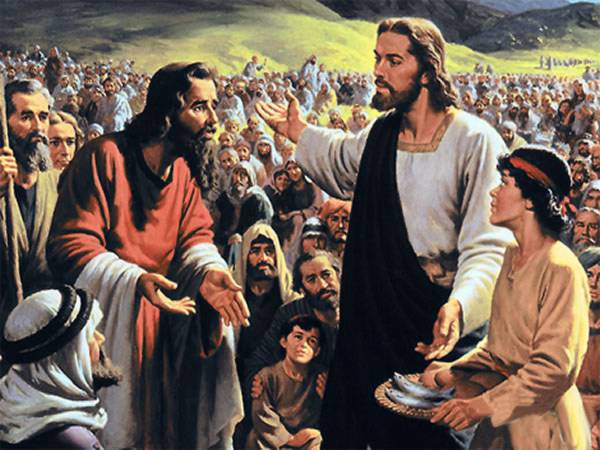
In a statement that reminded me of the message at Resurrection nearly two months ago, Bishop Jakes explained that Jesus moved in masses of people throughout the gospels.  He fed 5,000 by the Sea of Galilee.  He had an inner circle of three disciples who went with him places that the other nine couldn’t, and of course, he had those famous twelve disciples who accompanied Christ during his whole earthly ministry and got to know him and learn from him.  Bishop Jakes explained that, when he was younger and a holy man came to visit his church, people would fight over who got to serve him and sit with him and learn from him, but this trend has been abandoned in recent years, and younger pastors often “put on wisdom” in order to preach every Sunday morning.  This is not the way things should be.  Wisdom is not something you can simply put on; it must exude from your very pores.  Wisdom is about how you react to things.  The real power in our world is shown in response to accidents and incidents, not in causing them.  Similarly, in this passage, Jesus has set aside 70 people for a very specific mission.

(I should also note right up front that, in moving through this passage about the sending of the 70, Bishop Jakes hit a lot of points that were weirdly significant to me personally.  He made me think quite a bit about the role of a pastor and my own experiences on this journey, and even though he’s never met me, I sort of considered his words to be part of my own commissioning.  There were thousands of people in that room, but it felt like he was talking specifically to me on several occasions.)

The 70 are going out as Christ’s forerunners.  The mission isn’t really about them.  It’s about preparing the way for Jesus and his message, helping to make hearts along the way more fertile in order to receive Christ.  These men were just fertilizing the soil, and isn’t that how missions tend to work?  One plants, another waters, and all along the way, God increases.  For this reason, we can’t evaluate the worth of our ministries just by others’ reactions; we may just be helping to fertilize the soil a bit, and it’s not really about us anyway.  These men didn’t send themselves; they were given a mission by Jesus.  Bishop Jakes gave an example from his own life: Whenever he travels, he invariably encounters someone in an airport who will point and say excitedly, “That’s Bishop Jakes; he saved me!” to which Bishop Jakes invariably replies, “I most certainly did not.  I myself was called to be saved by Christ, and it is Christ who called you to be saved as well.”

Of course, this topic allowed Bishop Jakes to address another concern that had been building in his mind the more he spoke with converts to Christianity: We are not saved because of our sins; we are saved because God has a purpose in saving us.  After all, our experiences are limited, and there are plenty of worse sinners out there than us, but God chose us specifically and calls us to a mission and uses our experiences for God’s purposes.  After all, Romans 8:28 tells us that all things work for the glory of God, and all are called according to His purpose.  (Oh hi there, Romans 8, good to see you again.)  The mention of this verse provoked a response of “His purpose!” from the congregation.

Bishop Jakes explained that our various histories make us useful to God in different ways, and God works on us throughout our lives by whittling and shaping us to fit into His larger purpose.  (Wow, Erin totally used that exact same phrasing like three days ago.  Weird.)  Even when we question why things happen to us or why we are the way we are, God can look at us and say, “I made you the way I made you!”  Take Moses for example.  When Moses was called, he protested because he had such a violent st-st-st-stutter (and yes, Bishop Jakes did imitate the stutter and would do so several more times in the service).  Still, God was able to look at Moses and say, “Did I not make your mouth?  My strength is made perfect through weakness!”  As if on cue, my hand cramped, and my stomach grumbled with hunger.  How’s that for weakness?

Bishop Jakes continued by reminding us that God chose us, not the other way around.  God pulled us out of our everyday business-as-usual according to His purpose, not ours.  You are sent on a mission; it’s not all about you.  God predestined us for this, and though it was kind of a crude illustration, Bishop Jakes told us to think about how many sperm we were racing against, and God selected us out of millions to impregnate an egg and form a child!  God has a plan, so touch someone near you and tell them, “He sent me.”  (I received an elbow to the side from the woman next to me, who grumbled, “He sent me.”  I have no doubt that He did, but ouch anyway.)  God sent us in spite of weakness and mistakes, and this comment got amens from the congregation.

This image came to mind every time Bishop Jakes referenced the Devil.
Getting back to the passage, Bishop Jakes explained that the 70 are not sent off solo; they are paired and sent off two by two.  Of course, even though this is done to strengthen and edify them, the Devil works to corrupt relationships by convincing the people in them that they are “unequally yoked.”

Whoa.

Okay, setting aside the obvious connection of yokes to the incredibly powerful sermon I heard the previous Sunday night from Scott Erickson at Ecclesia, I need to explain that the phrase “unequally yoked” has an incredibly deep and personal significance to me.

As I’ve explained a couple of times before, back in college, I sort of thought that I was heading toward marrying my long-time girlfriend at the time (who was preparing to enter medical school and, though she respected religion and bore no animosity toward it, did not claim any faith tradition herself).  Well, when I sort of rediscovered my call to ministry during our senior year and officially abandoned the whole law school thing, it led to some unease between us.  One day that spring, I was talking to a friend and advisor who told me pointblank and out of the blue that I was going to have to end the relationship eventually as we were “unequally yoked”-- two strong individuals who were marching in different directions professionally, geographically, and spiritually and would ultimately find ourselves unable to communicate the struggles of our vocations to one another or support one another.  I was angry with that advisor for a while and pushed that conversation as far out of my mind as I could for as long as I could, but I ultimately had to accept that he was right.  Hearing the phrase again in T.D. Jakes’s sermon, I thought back to that conversation and meditated for just a split second on the “unequally yoked” concept.  Having been in div school for two years, having given those wounds time to heal, and now being in a relationship with someone who is headed in my same direction, I think I get it now.  The words still made me wince a bit (and will likely continue to make me wince in the future), but I guess that’s another example of the whittling and shaping about which both Erin and Bishop Jakes had already spoken.  I snapped back to reality to find Bishop Jakes still elaborating on this one concept . . .

The Enemy (artist's rendering)
Fights with a partner are one of the easiest ways to get distracted from your shared mission.  We all get caught up trying to win battles that we weren’t even really sent to fight when we should be trying to get the job done together instead.  We must keep in mind that we’re working for the same purpose, and that a victory is not marked by one person winning, but by both people continuing to work together in a spirit of love and charity and cooperation, and sometimes that means you just have to suck it up and go with what the other person says!  We shouldn’t be wasting our time on fighting anyone but the Enemy!  The 70 must constantly check themselves on what is and is not important, and some of the shortcomings we see in ourselves really don’t matter to God.  Bishop Jakes encouraged us to repeat the refrain “It doesn’t matter” as he spoke.  He imitated Moses’s stutter again.

It doesn’t matter.

He talked about how, as he has grown older, he’s realized that more and more things that he once found important really belong in the column of things that don’t matter.  He listed a few, and each time, the congregation responded.

It doesn’t matter.
It doesn’t matter.
It doesn’t matter.

Dripping with sweat, Bishop Jakes produced a red handkerchief that he continually used to dab his forehead and cheeks as he continued to boom from the platform.  He explained that our homework was to reexamine the things that we thought essential and consider carefully which ones we might move over to the “It doesn’t matter” list.  After all, real maturity is about identifying more and more of these factors.  Real maturity is about not getting distracted from one’s true purpose.  From here, Bishop Jakes came up with an example that caught me a bit off guard, but when I thought about it, it made total sense:

If you want to get technical, Saul was more moral than David.  Saul might have even been the better and more politically savvy king really, but God chose to work through David.  Why?  Well, the Bible calls David a “man after God’s own heart,” meaning that David sought God above all else and was open and sensitive to where God might be leading him.  David also made his fair share of mistakes, but, as David’s story demonstrates, we can’t dwell on our mistakes and must remember that we are called to greater things.  We also can’t allow others to hold our mistakes over our heads since that is a matter between the individual and God.  “Don’t let folks get in God’s business!” Bishop Jakes informed us, “If God only used good people, then God wouldn’t use anybody!”  As David and Saul demonstrate, righteousness isn’t much use without sensitivity to the mission; at that point, it just becomes self-righteousness.  So don’t fight with yourself.  You can’t change what’s already behind you.  When you hear folks talking about you, just say to yourself, “Let ‘em talk!” and move their remarks over to the it-doesn’t-matter list.  They’re not your mission, and if they get in your way, God will find a way to clear a path for you.  Bishop Jakes shouted, “To God be the Glory!” and from here, he entered into a preaching cadence that was difficult to discern at times, and I wondered if the speakers were on the fritz or if I wasn’t hearing him right over the crowd or if maybe he had gotten carried away with the emotion of the service and was dipping into a private language of some kind

Bishop Jakes moved into one of his most developed metaphors from here: sheep sent out among wolves.  He made it clear that this is a call to be vulnerable.  “God doesn’t make us comfortable, only vulnerable,” he explained referencing Moses’s st-st-stutter once again.  Also, as anyone who has worked with them can tell you, sheep are pretty dumb, and with those little teeth, they’re not the most capable when it comes to self-defense.  Wolves, on the other hand, are vicious and conniving hunters, so God is pretty much saying that He’s going to put us among people who want to eat us.  Still, just because God is placing us there, that doesn’t mean that we are the ones who will fight the wolves.  With their teeth and claws and physical strength and predatory cunning, we would be hopelessly outmatched against them.  (At this point, Bishop Jakes uttered a vicious growl that produced laughter among the congregation.)  God sent us, so when the wolves chase us, we need to trust in God to protect and preserve.  We can’t fear the wolves.  We can’t get distracted in trying to fight them ourselves.  After all, we lack teeth.  Instead, we have to focus on the call, and when wolves come along, we must look to the Lord who is our Shepherd.  The battle belongs to the Lord, and that means that we get to tell the wolves, “Hey, check out that big guy with the stick!”  We are not our own shepherds.  God shepherds and protects us.  Our call is to maintain our focus!

Not to keep chasing rabbits, but this reminded me of another frequent refrain in my life: sheep, shepherd, and sheepdog.  I have a huge issue with people describing pastors as “shepherds,” and I cringe every time someone references “Rev. So-and-So’s flock.”  It’s my opinion that, aside from literal herders of sheep, Jesus is really the only person to whom we should be ascribing the title of Shepherd.  A shepherd is the one who decides on the flock’s destination and guides the flock and protects the flock.  Pastors answer to the same Shepherd as everyone else and chase after that Shepherd and rely on His guidance too.  We’re not really shepherds ourselves, but we’re also not quite the same as sheep, so what exactly are we?  Back in the summer of 2006, I spent one week working at Heifer Ranch in Perryville, Arkansas, before realizing that A) I am not nearly as liberal as I thought I was, and B) farm living really is not for me.  Even though I got out of there ASAP, I acquired several very useful lessons during that brief time.  I learned how to make cheese; I developed a grudge against goats that I hold to this day; and I discovered that a black widow’s web is capable of catching a #2 pencil thrown at high speeds by an 18-year-old.  One of the more interesting experiences I had there was with a creature who very well might have been my spirit guide: a mangy old sheepdog who followed me around most everywhere.  I never learned his name or gave him a new one, but he was a fairly constant companion and really the only individual there with whom I felt a strong connection.  When musing on the role of a pastor years later, I thought back to that dog.

From a distance, pastors are indistinguishable from the rest of the flock, but many are a little wiser thanks to life experience, biblical study, and having scratched at a few more fleas than the average sheep.  A sheepdog is slightly more adept at fending off predators and protecting a flock, even though that responsibility is ultimately fulfilled by the Shepherd.  Additionally, it often falls to the sheepdog to bark at the sheep and keep them in line as we all move in the direction the Shepherd has picked out for us, and that can sometimes be a thankless job, but I think it’s worthwhile.  So yeah, I’m in agreement with everything Bishop Jakes was saying about sheep and wolves, but I want to add that I see pastors as being like sheepdogs-- the mangy, ornery members of the flock helping to defend it and keep it from wandering too far away from the Shepherd.  We’re no more aware of the long-term destination than the sheep, and we’re no more evolved intellectually, but we do have a slightly modified skillset for helping to address problems in the community (i.e. a bigger bark and sharper teeth).  I’m getting off-topic though.  Back to the sermon . . .

Bishop Jakes explained to us that the sheep-and-wolves passage is meant to tell us that we will be uncomfortable as we pursue God’s call, but we have to keep moving.  We have to learn to be effective in our discomfort.  God’s mission is not our comfort; God calls us into danger, discomfort, lack of support, and wolves on all sides.  Bishop Jakes encouraged us not to dwell on resources and money and reminded us that we’re not called to stuff and not called to capitalism (which I found interesting given his CEO/entrepreneur background-- seemed to make him very qualified to speak on the subject).  We must focus on God and not merely on providing for ourselves.  God has figured it out and will take care of the traffic in our lives.  After all, God has ordered the entire universe, so surely our lives are within God’s control.  (I thought back to God’s words in Job 38 and the subsequent chapters: “Where were you when I laid the foundations of the earth?”)  Stay focused, and the little blessings --and some big ones too-- will fall into line as we push on toward God and the mission to which we are called.  Our needs will be met (even if not in the most comfortable fashion).  We’ll encounter miracles.  We’ll also encounter widows and orphans set aside for us to work with and aid.  These are all treasures that have been set aside for you.  A really radical faith is one that says, “It’s already done!”  (This phrase was repeated enthusiastically by the congregation, and I found myself smiling at this reversal of prosperity gospel: the people we work with and aid are the blessing-- I really like that spirit.)

Bishop Jakes used an example from his own life and talked about how, when he first moved to Dallas, people told him, “You’re creative and have the expertise.  It’d probably be cheaper if you built your own house!”  Of course, building a house takes time and resources and planning, and you have to work with zoning laws and all sorts of restrictions and builders and various city personnel, and all of this becomes a distraction for people on a mission.  Focus on the mission; let someone else build the house; you just move into it.  After all, the planting has already been done by others, and now it falls to us to reap the harvest!

Bishop Jakes gave big sweep of his arms as if swinging a scythe.  He had been pacing around for nearly 45 minutes and had not looked at a single notecard since walking on stage.  We were roughly halfway through his message.  “Don’t waste time with a shovel!  Just reap that thing!  Reap that thing!  Reap that thing!”  As he repeated that line over and over again, he was greeted with an excited response from the congregation.  There was shouting and moving in the aisles, and I even heard a loud shriek over my shoulder as one woman felt the spiritual significance of Bishop Jakes’s comment.  Also, someone in the balcony was shaking a tambourine wildly whenever a more enthusiastic point was delivered.  “REAP THAT THING!”  The bass drum and the organ kicked in as Bishop Jakes flew into a litany: “Praise God for the harvest!  Praise God for the house!  Praise God for the covenant!  Praise God for the open door!” all of this greeted with shouts of joy and praise from the congregation.

Bishop Jakes brought us back in though and, citing Psalm 126, he informed us that crying and tears are meant for the sowers, but we reap with joy!  (Hey, that’s the title of my mom’s book.  A lot of weird personal significance in this sermon.)  The Devil tries to make us cry and mourn at the wrong times, but we need to have a reaping spirit.  We need to stop quitting and losing our joy; it’s reaping time!  “Reap it!  It’s ready!  Reap it!  It’s ready!  Reap it!  It’s ready!”  This repetition was greeted with tremendous shouts of “Yes!  Yes!  Yes!” from the congregation.  “We have survived the wolves!  We have sowed!  We have cried!  Now it’s reaping time!  Turn and say to a brother or sister, ‘THIS IS MY REAPING STAGE!’”  We complied with the instruction, and again I felt a hard, sharp elbow in my side from the woman next to me.  Oh how I wished the Spirit would move me to jab that woman back, but I just rubbed my side and continued to worship instead.  We were all standing and clapping as Bishop Jakes told us, “He’s hit me with a Word this morning!” a comment that was greeted with hallelujahs.  He told us that someone in the room today was going to step into a prepared blessing.  Someone in the room is going to step into a prepared miracle.  “SOMETHING IS ABOUT TO HAPPEN!  IT’S READY!”

This all took place just a week before the ordination.  Random thought.

The ushers were walking around with boxes of tissues for the worshipers.  People were up and moving around the sanctuary, and Bishop Jakes urged us to “jump up and holler ‘I’m on a mission!’”  “I’M ON A MISSION!”  He encouraged us to move from distraction and follow the mission.  After all, we didn’t create ourselves.  We’re on assignment, and we have to trust in God to provide for us along the way.  (As Elwood Blues once put it, “We’re on a mission from God.”)  I was beginning to understand that, for Bishop T.D. Jakes and the Potter’s House, blessing really wasn’t about money.  It was more like the blessing given to Jacob in the book of Genesis: a signifier that God is with us and has tasked us with a special purpose in life.  No matter what backward cultural connotations we might ascribe to it (money, power, good fortune, etc.), a blessing is really a calling.  It’s not about God putting something in our wallets; it’s about God putting something in our hearts and on our minds.  It’s about having a full plate in the metaphorical sense, not the literal.

A typical non-receptive House.
We had been substantially pumped up, so it was time to move into the meat of the text from that morning: knowing which house is the right house.  Bishop Jakes informed us that this passage gives us a test for the houses we encounter on the journey.  We have to be sensitive to the Spirit as we go into these houses (since, after all, we can’t just stand outside and look-- it’s like a new suit; you need to go in and try it on).  The 5,000 who appear earlier in the gospel needed direction; these 70 need discernment.  After all, some houses are not receptive.  Some houses are not for us.  We shouldn’t be depressed if we get rejected by such a house though; it just wasn’t the one God had in mind for us.  We shouldn’t waste our energy getting upset or disappointed; we should just move on.